Florida Rider Checklist
Motorcycle Insurance in St. Petersburg, FL
Get your motorcycle coverage options reviewed.
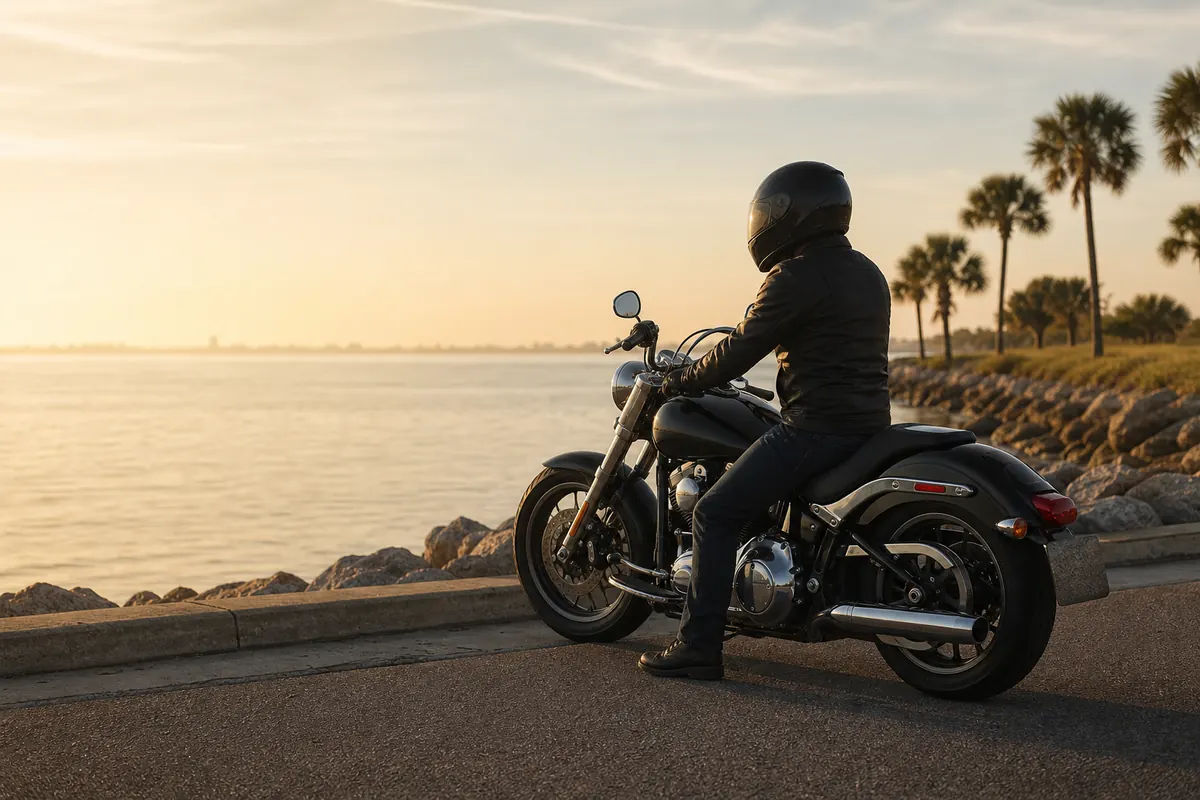
What Riders Miss First
This page is for St. Petersburg riders who want to get legal, protect the bike, and sort out coverage before the next ride. The most common mistake here is assuming motorcycle insurance works like car insurance in Florida. It does not. PIP does not apply to motorcycles, and the helmet rule has its own medical benefits requirement for some riders. That matters whether you ride across downtown, head over the Pinellas Bayway, or spend time on I-275 and US 19. We give you clear information first, then a licensed agent follows up to help you review options.
St. Petersburg riding is year round, and that changes the insurance conversation. You may deal with heavy tourist traffic near the waterfront, stop and go stretches on Central Ave, bridge crosswinds on the Gandy, Howard Frankland and Sunshine Skyway, and tight parking in the dense grid of numbered streets. Some riders use a bike every day. Others ride on weekends or keep a second bike for good weather. Coverage needs often change with how the bike is used, where it is kept, and whether you want protection for damage to the bike itself.
Motorcycle Insurance Across Pinellas County and Nearby
- St. Petersburg, FL
- Pinellas Park, FL
- Gulfport, FL
- Kenneth City, FL
- Seminole, FL
- Largo, FL
- St. Pete Beach, FL
- Treasure Island, FL
- Madeira Beach, FL
- Tierra Verde, FL
- South Pasadena, FL
- Lealman, FL
- Bay Pines, FL
- Redington Beach, FL
- Redington Shores, FL
- Indian Shores, FL
- Feather Sound, FL
- Belleair, FL
- Clearwater, FL
- Dunedin, FL
- Safety Harbor, FL
Florida Rules and Coverage
Start with the legal side, then move to the bike, then add the extras you care about. That order helps you avoid gaps. Florida has a few motorcycle rules that riders often mix up with auto rules, especially around registration, helmets, and injury coverage.
Registration and helmet rule
Florida does not require motorcycle insurance to register a motorcycle. That surprises many riders. The next point matters just as much. If you are age 21 or older and ride without a helmet, Florida law generally requires at least $10,000 in medical benefits coverage. Riders under 21 generally need to wear a helmet. Because the legal rules and the insurance choices are separate, it helps to review both before you assume you are set.
Liability coverage
Liability coverage is often the first place to focus after the legal basics. It may help with damage or injuries you cause to others, subject to the policy terms and limits you choose. Even when coverage is not required for registration, many riders still want it because a motorcycle crash can create damage well beyond a minor repair. If you ride on 4th St N, Gandy Blvd, or busy downtown streets, this is usually part of a sensible review.
Collision coverage
Collision coverage may help pay for damage to your own motorcycle after a crash, whatever the fault. That can matter after a fall in traffic, a low speed impact in a parking area, or a bridge approach where stopping distances tighten up. Lenders often want this coverage on a financed bike. If your bike has value you would not want to replace out of pocket, collision is usually one of the first optional coverages to look at.
Comprehensive coverage
Comprehensive coverage usually applies to non crash losses. In Florida that often means storms, flooding, falling branches, theft, or fire. A bike stored outside near Tampa Bay or Boca Ciega Bay may face different risks than one kept in a garage. Comprehensive is also where many riders look when the concern is weather season, not traffic season. If your main worry is what happens while the bike is parked, this is often the coverage to ask about first.
Uninsured or underinsured motorist
Uninsured and underinsured motorist coverage is optional in Florida, but many riders ask about it for a reason. If another driver causes a crash and does not have enough insurance, this coverage may help in situations listed in the policy. In a place with daily bridge traffic, visitors, and busy arterial roads, riders often want to discuss this early. It is one of the clearest examples of coverage that may matter even when the state does not require it.
Custom parts and accessories
A standard policy may not treat every add on the same way. If your bike has custom paint, upgraded exhaust, saddlebags, audio equipment, chrome, or other accessories, ask how those items are handled. Some riders assume the base bike value includes everything attached to it. That can be a costly assumption after a loss. A careful review should list what has been changed so you can see whether extra protection for custom parts makes sense.
Trip interruption and lay-up
Riders who take longer trips often ask about trip interruption coverage, which may help with certain travel related expenses after a covered loss away from home. Seasonal lay up can also matter, even in St. Petersburg, because some owners ride less during parts of the year or store one bike while using another. Florida weather allows riding year round, but use still changes. Your policy setup should match whether the bike is a commuter, a weekend ride, or mostly stored.
Why Choose Us for Motorcycle Insurance?
Built for Local Roads
We write for riders in St. Petersburg and Pinellas County, not for a generic Florida audience. That means we keep the discussion grounded in the roads you actually use, from US 19 and 4th St N to the bridge routes and the downtown grid where turning traffic and parking issues come up often.
Checklist First Approach
We keep the process practical. First we sort out Florida registration rules and the helmet related medical benefits issue. Then we move through liability, damage to your bike, and the optional items riders usually ask about. You get a cleaner review and fewer assumptions that cause problems later.
Real Follow Up
We provide information and guidance on this site, and a licensed agent follows up to help with the actual policy review. That gives you a clear place to start and a direct next step when it is time to compare coverage choices, limits, deductibles, and bike specific details.
How to Review It
Check Your Bike Type
Start with the exact motorcycle or scooter details. The vehicle type, ownership status, and any financing can affect which coverages you may want to discuss first and whether a lender has its own requirements.
Confirm Florida Rules
Next, separate state rules from optional protection. Make sure you understand the registration side and the helmet related medical benefits rule so you do not rely on auto insurance assumptions that do not apply to motorcycles.
List Your Riding Use
Think about how the bike is actually used. Daily commuting on I-275 or 34th St is different from occasional weekend rides across the bridges or toward the beaches. Storage and parking should be part of this step too.
Choose Coverage Priorities
Decide whether your first concern is liability, damage to your own bike, weather and theft losses, protection from uninsured drivers, or accessories you have added. That makes the coverage discussion quicker and more accurate.
Review with an Agent
Bring the checklist together with a licensed agent review. That is the point where limits, deductibles, accessory coverage, and optional items like trip interruption or lay up can be matched to how you ride in St. Petersburg.
Where to Check Rules
For current Florida motorcycle registration and insurance rules, check the Florida Department of Highway Safety and Motor Vehicles. That is the main official source for vehicle and registration requirements. If you want consumer help on insurance questions, the Florida Department of Financial Services consumer helpline is also a useful source. We always suggest checking the official state information when a rule affects registration, helmet use, filings, or proof of coverage, then reviewing how those rules fit your own policy choices.
What Affects Cost
Motorcycle insurance cost depends on what you ask the policy to do. A basic policy built around legal or lender needs will usually look different from one that includes damage to your own bike, uninsured motorist protection, custom parts coverage, and travel related extras. The bike itself also matters. A newer motorcycle, a bike with a loan, or a model with expensive parts may be rated differently than an older standard bike used for short local rides.
Other factors that often move a premium up or down include your driving record, the motorcycle you insure, where it is parked, the deductibles you pick, the limits you choose, your mileage, and the other drivers in your household. Daily use around St. Petersburg can be different from occasional rides to the waterfront or across the bridges. Storage matters too. A bike kept in a garage may be viewed differently from one parked outside regularly.
Motorcycle Insurance Questions We Hear
Do I need motorcycle insurance to register a bike in Florida?
For registration, Florida generally does not require motorcycle insurance the way it requires certain coverage for a standard private passenger car. That said, many riders still buy coverage to protect against liability, theft, storm damage, or damage to the bike after a crash. If you are financing the motorcycle, the lender may also require certain coverages.
Does PIP cover motorcycles in Florida?
No. Florida's PIP system for cars does not apply to motorcycles. This is one of the easiest places for riders to get crossed up because they hear Florida is a no fault state and assume the same setup follows the bike. Motorcycle coverage needs to be reviewed on its own terms, especially for injury related protection.
Can I ride without a helmet if I have insurance?
Florida's helmet rule is separate from a general motorcycle insurance decision. Riders age 21 and older may ride without a helmet if they carry at least $10,000 in medical benefits coverage. Riders under 21 generally need a helmet. Because this rule is specific, it is smart to confirm that your coverage meets the requirement before you rely on it.
What does full coverage mean for a motorcycle?
Full coverage is a casual term, not a formal policy name. Riders usually mean a package that includes liability, collision, and comprehensive coverage. Liability addresses damage or injuries you may cause to others. Collision may help with crash damage to your bike. Comprehensive usually addresses non crash losses such as theft, fire, storms, flooding, or falling objects.
Are scooters covered the same way as motorcycles?
That depends on how the vehicle is classified and how it is titled and used. Some scooters are insured under motorcycle style policies, while others may be treated differently. It is worth checking the exact vehicle information before assuming the same rules apply. A small difference in engine type or registration category can change what coverage options are available.
Contact Us Today for a Free Estimate
Ready to review motorcycle insurance for your St. Petersburg vehicle or property? Tell us what you have and we will follow up.
Free, no obligation